
System Design Insights
Deep dives, tutorials, and practical guides to level up your architecture skills.
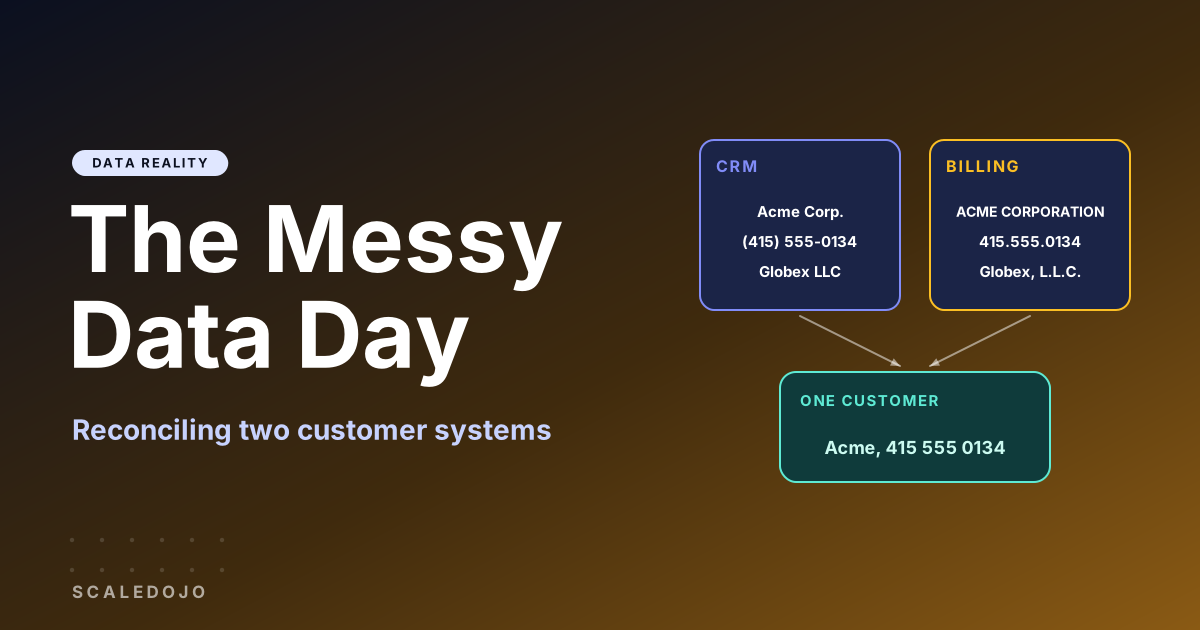
The Messy Data Day: Reconciling Two Customer Systems
How to reconcile two customer systems: profile, normalize, match in layers, review the unsure pairs and load safely, with a matcher to try.
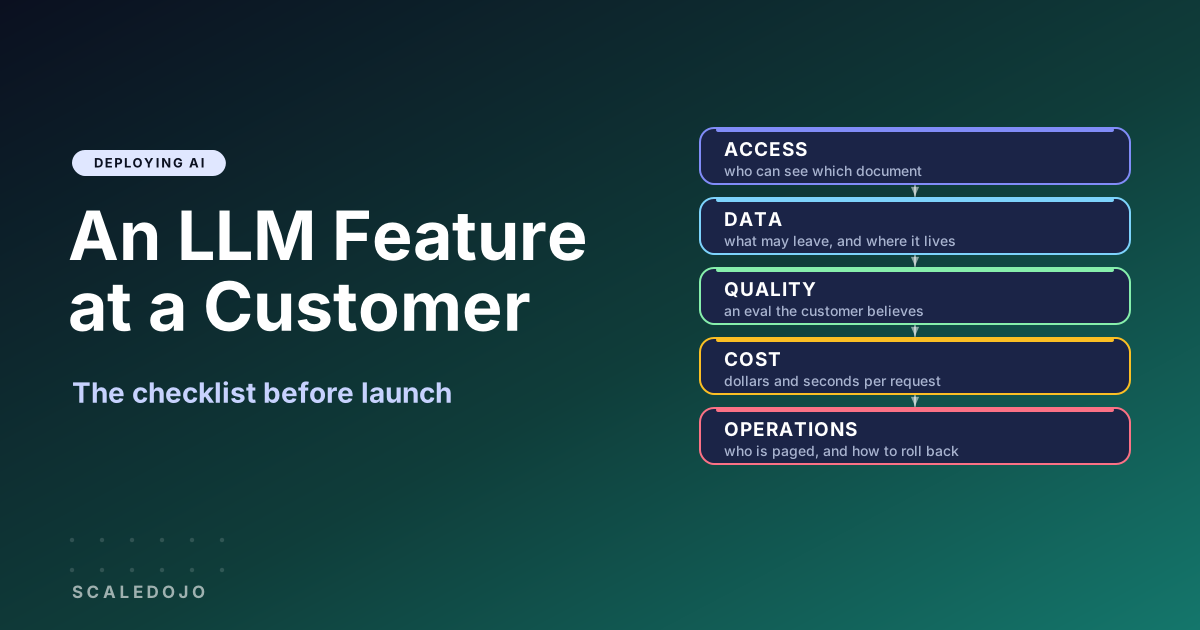
Deploying an LLM Feature at a Customer: The Checklist
Five gates to clear before an LLM feature goes live at a customer: access, data, quality, cost and operations, with a launch check.
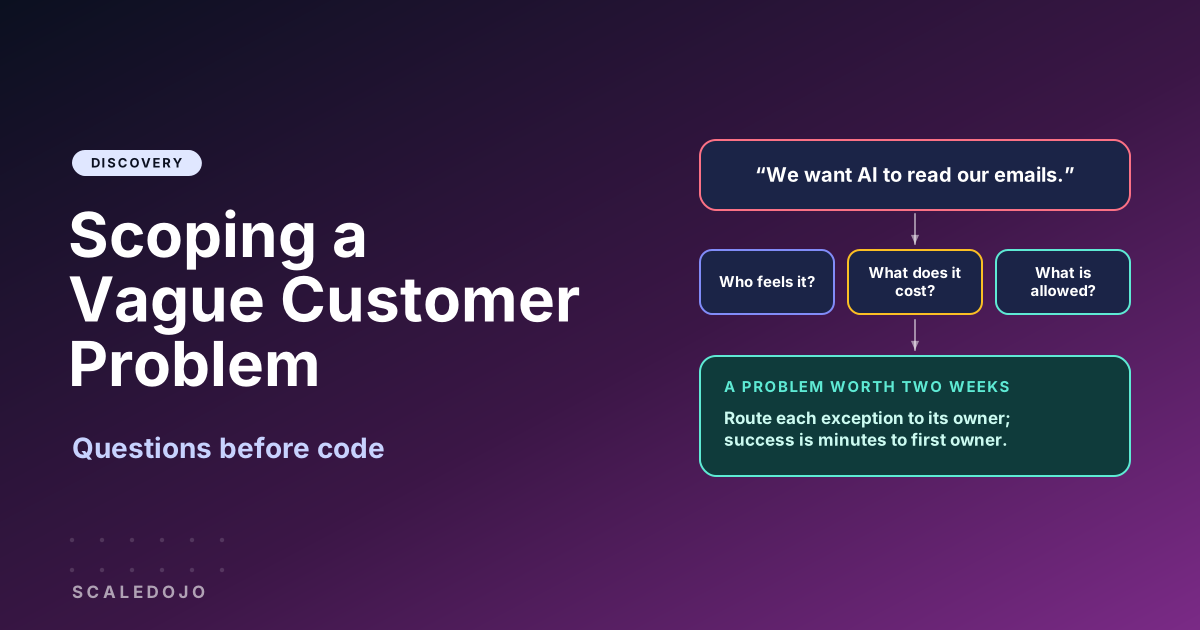
Scoping a Vague Customer Problem: Questions Before Code
How a forward deployed engineer turns a vague customer request into a problem worth a two-week pilot, with a practice call you can try.
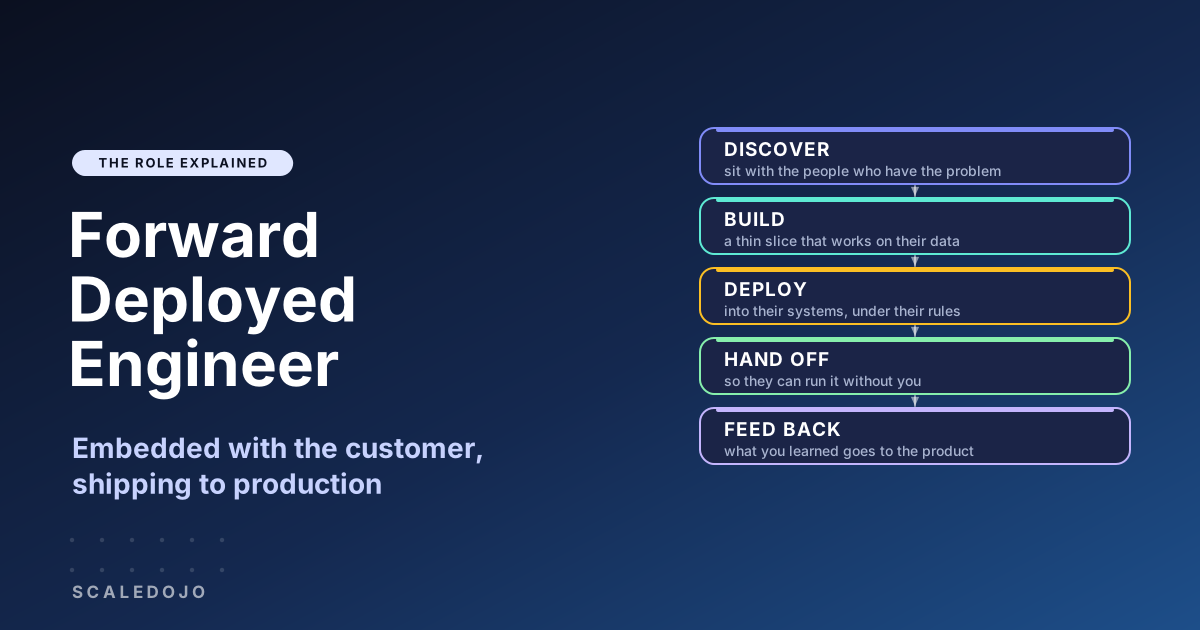
What Is a Forward Deployed Engineer? The Role Explained
What a forward deployed engineer does, how the role differs from software, solutions and consulting jobs, and what employers publish about it.

Why Choose ScaleDojo? A System Design Practice Platform with 10 Hands-On Features

Forward Deployed Engineer Interview Prep: Decomposition and System Design Guide
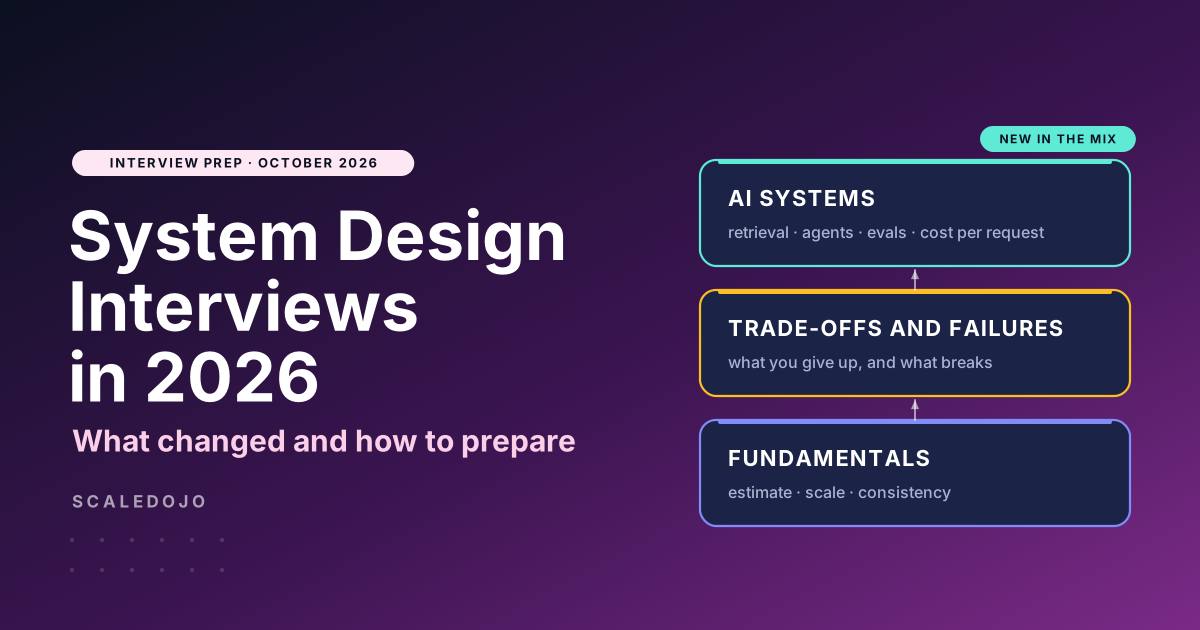
System Design Interviews in 2026: What Changed and How to Prepare
What has changed in system design interviews in 2026: AI-assisted rounds, AI-system prompts and deeper trade-offs, mapped to a practice plan.
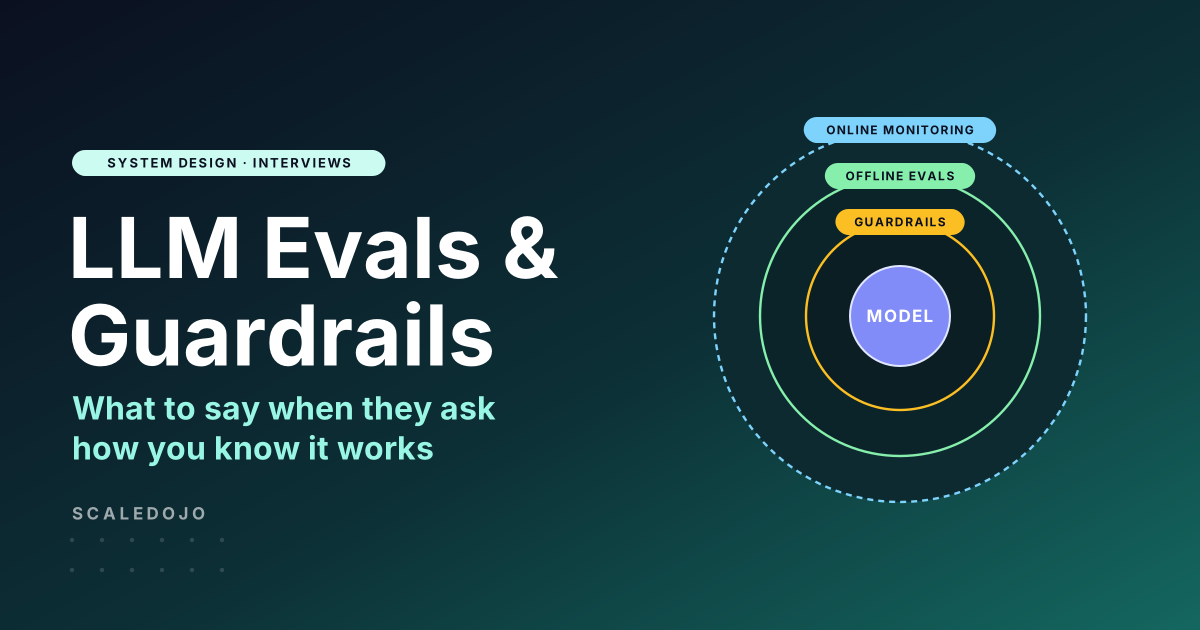
LLM Evals & Guardrails in System Design Interviews: What to Say
Most candidates skip the evaluation and safety layer of an AI design. Here is a concrete checklist, and what to say about it in 90 seconds.
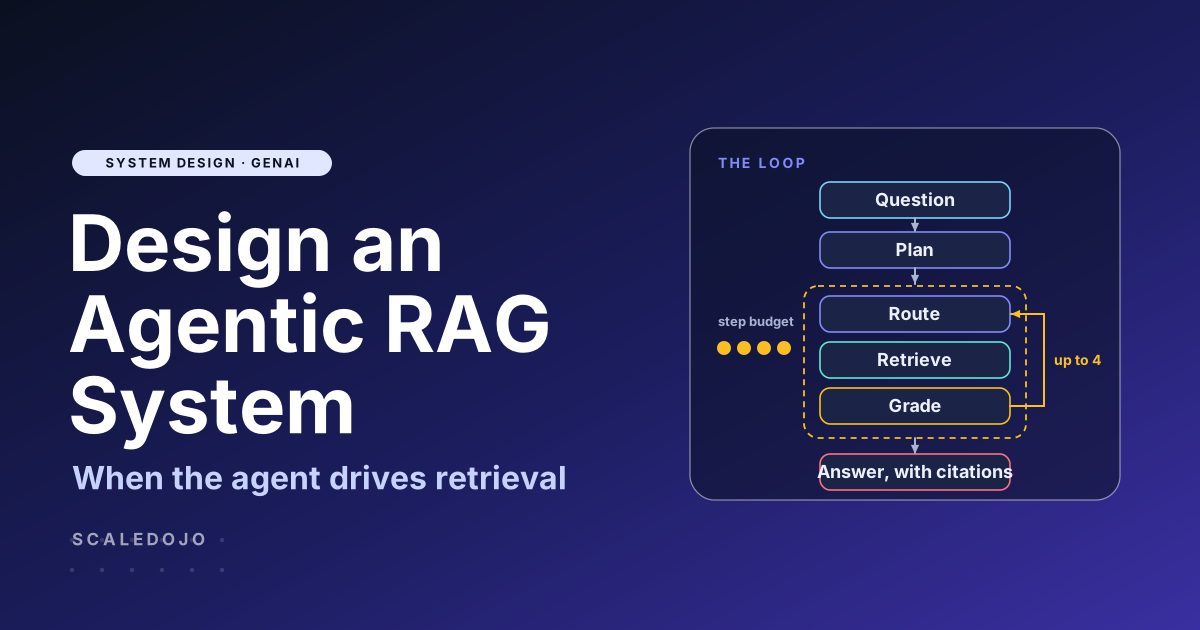
Design an Agentic RAG System: When the Agent Drives Retrieval
How to design an agentic RAG system in an interview: query planning, tool routing, failure modes and a latency and cost budget you can defend.
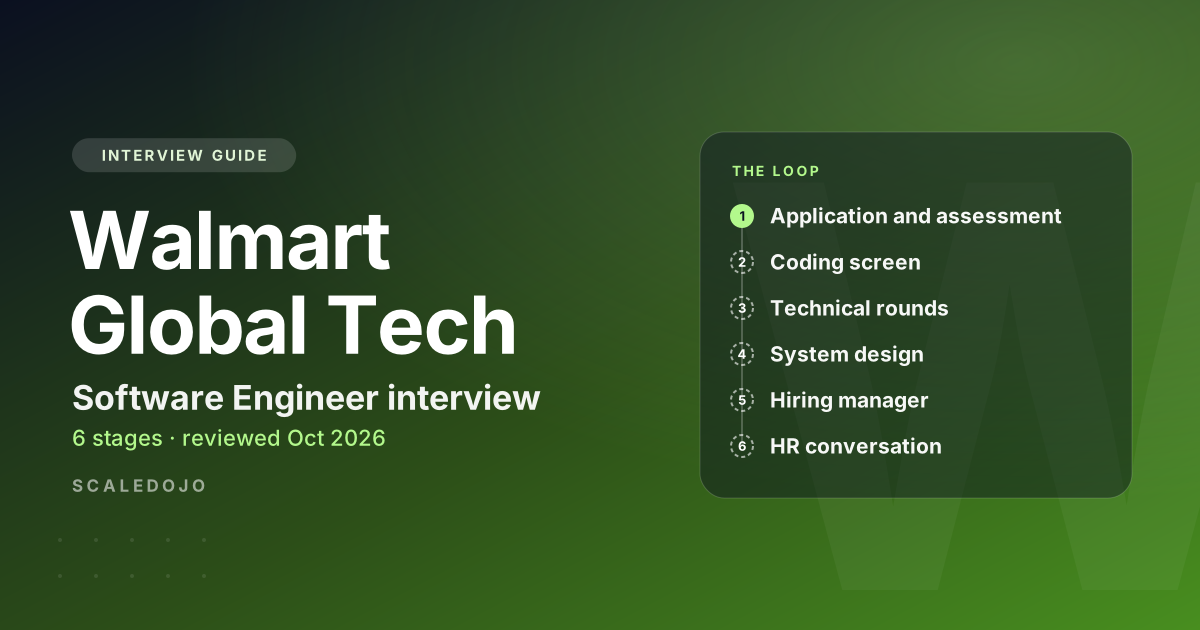
Walmart Global Tech Software Engineer Interview Guide
What Walmart Global Tech software engineer interviews usually involve: coding, technical and design rounds, the hiring manager, and a prep plan.
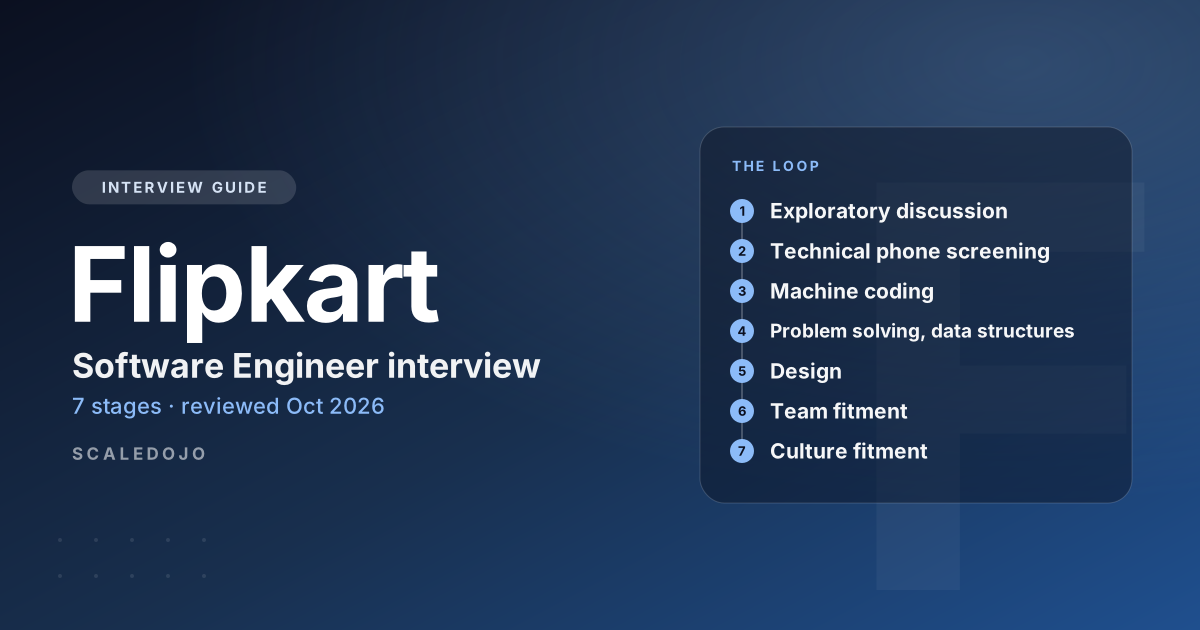
Flipkart Software Engineer Interview: Every Round, Explained
How Flipkart's SDE interview works: the 120-minute machine coding round, problem solving, design, team and culture fitment, and a prep plan.
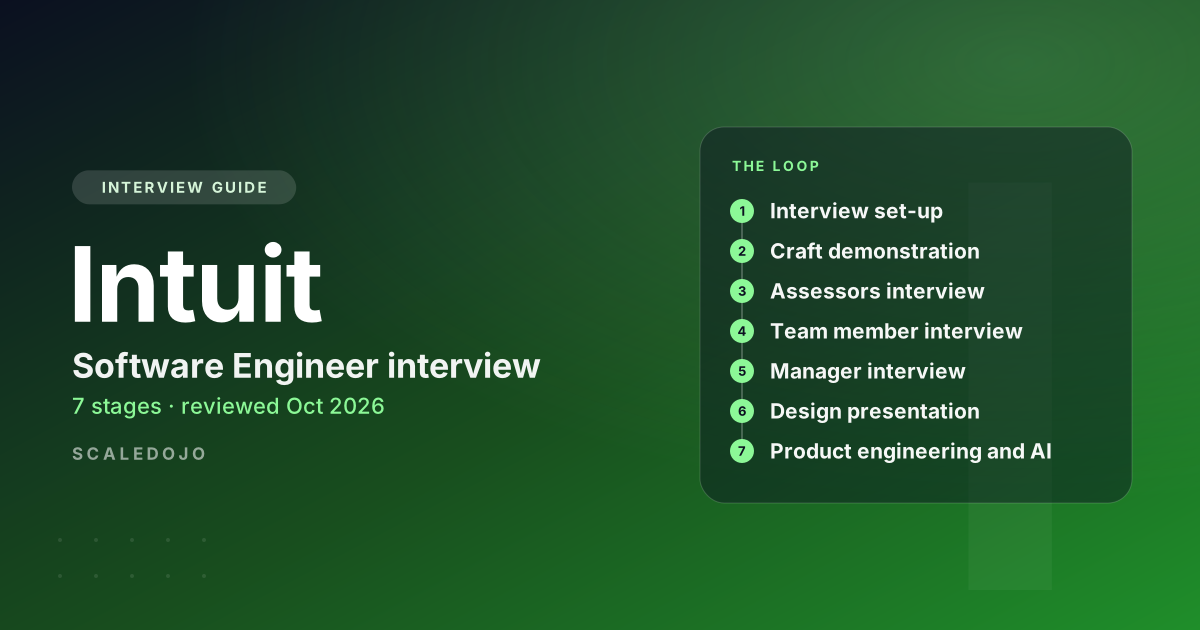
Intuit Software Engineer Interview: Every Round, Explained
How Intuit's software engineer interview works: the craft demonstration, manager interviews, a design presentation, AI proficiency, and a prep plan.
Browse all 246 articles
- The Messy Data Day: Reconciling Two Customer Systems
- Deploying an LLM Feature at a Customer: The Checklist
- Scoping a Vague Customer Problem: Questions Before Code
- What Is a Forward Deployed Engineer? The Role Explained
- Why Choose ScaleDojo? A System Design Practice Platform with 10 Hands-On Features
- Forward Deployed Engineer Interview Prep: Decomposition and System Design Guide
- System Design Interviews in 2026: What Changed and How to Prepare
- LLM Evals & Guardrails in System Design Interviews: What to Say
- Design an Agentic RAG System: When the Agent Drives Retrieval
- Walmart Global Tech Software Engineer Interview Guide
- Flipkart Software Engineer Interview: Every Round, Explained
- Intuit Software Engineer Interview: Every Round, Explained
- Snowflake Software Engineer Interview: Every Round, Explained
- Databricks Software Engineer Interview: Every Round, Explained
- Shopify Software Engineer Interview: Every Round, Explained
- Spotify Software Engineer Interview: Every Round, Explained
- Atlassian Software Engineer Interview: Every Round, Explained
- NVIDIA Software Engineer Interview: Every Round, Explained
- Oracle Software Engineer Interview: Every Round, Explained
- Salesforce Software Engineer Interview: Every Round, Explained
- Adobe Software Engineer Interview: Every Round, Explained
- Airbnb Software Engineer Interview: Every Round, Explained
- Apple Software Engineer Interview: What to Expect
- PayPal Software Engineer Interview: Every Round, Explained
- LinkedIn Software Engineer Interview: Every Round, Explained
- Stripe Software Engineer Interview: Every Round, Explained
- SOLID Principles: A Practical Guide with Real-World Examples
- LLD: Master the Building Blocks of Low-Level Design
- Caching Strategies: Invalidation, Placement, and Real-World Trade-offs
- The Top 6 System Design Learning Platforms in 2026
- API Gateway, BFF, tRPC, and the Multi-Protocol Architecture
- AsyncAPI, CloudEvents, and the Transactional Outbox Pattern
- AMQP, Kafka, and Event Sourcing: The Async API Story
- Protocol Buffers, gRPC, and HTTP/2: The Binary Wire Protocol Story
- Apollo, Subscriptions, and Federation: GraphQL Grows Up
- GraphQL: How Facebook's Mobile Crisis Created a New Query Language
- Stripe, Swagger, and OAuth 2.0: API Design Grows Up
- OAuth, Webhooks, and Twilio: The API Economy Takes Shape
- JSON, Twitter, and the Richardson Maturity Model: REST Goes Mainstream
- Table Partitioning, Event Sourcing, Row-Level Security, and Vector Schemas
- Fielding, Bezos, and Flickr: How REST Went from Dissertation to Mandate
- UUID vs Auto-Increment, JSONB, and Schema Migrations: System-Wide Decisions
- Sharding, Replication, and Multi-Tenancy: Schema Design for Scale
- State Machines, Idempotency Keys, and Audit Trails in Database Schemas
- Double-Entry Bookkeeping, Soft Deletes, and RBAC: Real-World Schema Patterns
- SOAP, WSDL, and WS-*: Inside the Enterprise XML Cathedral
- HTTP/1.1 and XML: The Protocol That Runs the Internet
- HTTP/0.9, CGI, and HTTP/1.0: The Birth of the Web API
- CORBA, DCOM, and Java RMI: The Platform Wars That Made REST Inevitable
- ARPANET, FTP, and Sun RPC: How Machines First Learned to Talk
- Partial Indexes, Expression Indexes, and Strategic Denormalization
- B-Trees, Query Optimizers, and Index Design: How Databases Find Anything Fast
- Trees in SQL: Adjacency List, Materialized Path, and When to Use a Graph Database
- Many-to-Many Relationships, Self-Referencing, and Polymorphic Data Modeling
- Primary Keys, Foreign Keys, Constraints, and Triggers: How Databases Enforce Reality
- Database Normalization Explained: 1NF Through BCNF and Temporal Data
- Observability, Feature Flags, and Platform Engineering: The Modern Operations Toolkit
- Oracle, ANSI SQL, and PostgreSQL: How the Relational Model Became the Industry
- Hamilton's Paper and the SRE Book: How to Actually Operate Systems at Scale
- Codd's Relational Model, SQL, and the ER Diagram: The Foundations of Every Schema
- Edge Computing, Multi-Region Active-Active, and Geo-Sharding: The Planet-Scale Playbook
- CODASYL, Flat Files, and the Pre-Relational World
- CDNs and CRDTs: How Global Systems Handle Distance and Conflict
- Spanner, Spark, and Time-Series DBs: Three Distributed Systems That Changed What Is Possible
- Disk Storage, Hierarchical Databases, and the Birth of Data Navigation
- LSM-Trees and Elasticsearch: The Storage Engines Behind Write-Heavy Systems
- Circuit Breakers and Service Mesh: How Microservices Stay Resilient
- Chaos Engineering, Docker, and Kubernetes: Building Systems That Survive Failure
- Netflix's Cloud Migration and the Twelve-Factor App: How Microservices Were Born
- Lambda Architecture, WebSockets, and Flink: The Real-Time Processing Playbook
- The Log and Apache Kafka: The Append-Only Data Structure That Changed Everything
- Cassandra, the NoSQL Explosion, and CAP Revisited: When Databases Multiplied
- The Dynamo Paper: How Amazon Built a Database That Never Goes Down
- GFS, MapReduce, BigTable, and Chubby: Four Papers That Built Modern Infrastructure
- Google's First Architecture and the CAP Theorem: The Foundations of Distributed Systems
- The World Wide Web and Three-Tier Architecture: How the Internet Got Its Shape
- Multics, the Relational Model, and ACID: How Databases Got Their Guarantees
- MoE, Guardrails, Observability, and Reasoning Models: The Production Frontier
- LoRA, QLoRA, and LLaMA: How Fine-Tuning Became Accessible to Everyone
- vLLM, PagedAttention, and Serving LLMs at Scale
- Multi-Agent Systems, MCP, and AI Safety: Building Agents That Don't Go Rogue
- LangChain and LlamaIndex: The Frameworks That Shaped GenAI Development
- ReAct, Function Calling, and Tool Use: How LLMs Learned to Do Things
- Advanced RAG: Hybrid Search, Reranking, and How to Actually Evaluate Quality
- Vector Databases and Chunking Strategies: The Foundation of Production RAG
- LLM Hallucination and RAG: Why AI Makes Things Up and How Retrieval Fixes It
- ChatGPT and GPT-4: The Consumer AI Moment That Changed Everything
- RLHF and InstructGPT: How AI Learned to Follow Instructions
- GPT-2, GPT-3, and Scaling Laws: When Making It Bigger Actually Worked
- GPT-1 and BERT: The Pre-training Revolution That Made Modern AI Possible
- The Transformer Architecture: Attention Is All You Need, Explained From the Ground Up
- Seq2Seq and the Attention Mechanism: How Neural Networks Learned to Translate
- Word2Vec: How Words Became Vectors and Changed NLP Forever
- AlexNet, GPUs, and the Deep Learning Moment That Changed Everything
- LSTMs, Neural Language Models, and the Memory Problem That Shaped Modern AI
- The Perceptron, Backpropagation, and the AI Winters That Almost Killed Neural Networks
- GenAI Pipeline Lab: Build AI Architectures From Zero to Production
- Generative AI Examples & Complete Beginner Guide: LLMs to Agents
- RAG and Vector Databases: The Complete System Design Guide
- Scale From Zero to Millions of Users: Complete System Design Guide (2025)
- How to Drive the Design: Taking Ownership of the Interview Room
- Depth vs Breadth in System Design: Knowing What to Explore
- Time Management in 45-Minute System Design Interviews
- Whiteboard Communication: Drawing a System Design That Makes Sense
- Trade-off Articulation: Sounding Like an Architect, Not a Textbook
- Back-of-Envelope Estimation: The Art of Smart Calculation
- The RESHADED Framework: A Complete Mental Map for System Design
- Global CDN and Edge Computing: Putting Intelligence at the Network Edge
- Multi-Cloud Architecture: Avoiding Vendor Lock-In at Planetary Scale
- AI and ML Infrastructure at Scale: Serving Models to Billions of Users
- Chaos Engineering: Breaking Things on Purpose to Build Unbreakable Systems
- CRDTs for Conflict-Free Replication: Mathematics Prevents Data Conflicts
- Google Spanner: The Globally Consistent Database That Should Not Exist
- Multi-Region Active-Active Deployment: Being Everywhere at Once
- Design an E-Commerce Platform: The System Behind Every Online Store
- Multi-Tenant SaaS Architecture: One Platform, Thousands of Customers
- Design a Distributed Task Scheduler: Running Billions of Cron Jobs
- Design Ticketmaster: Handling the Taylor Swift Problem
- Design a Food Delivery System: DoorDash Engineering Under the Hood
- Design Google Docs: Collaborative Editing for Millions
- Design Google Maps: Navigation System Design for a Billion Users
- Design a Notification System: Delivering Billions of Alerts Reliably
- Design a Web Crawler: Mapping the Internet Systematically
- Uber System Design: Real-Time Ride Matching at Global Scale
- Design YouTube: Video at Planetary Scale
- Design WhatsApp: Real-Time Messaging for 2 Billion Users
- Design Instagram: Photo Sharing at a Billion Users
- Design Twitter/X Feed: The Hardest Feed System at Scale
- URL Shortener System Design: The Classic Interview Question
- Regulatory Compliance Schemas: Designing Databases That Pass Audits
- Risk and Margin Calculations in Trading Systems
- Multi-Currency Systems: Engineering Money Across Borders
- Idempotent Transaction Handling: Preventing Duplicate Charges at All Costs
- Double-Entry Ledger Design: The 500-Year-Old System That Powers Banking
- Payment Processing Architecture: How Stripe Moves Money Safely
- Polyglot Persistence: Using the Right Database for Each Job
- Data Lakes and Lakehouse Architecture: Analytics at Petabyte Scale
- Edge Functions: Running Code at the CDN Layer
- CDN Architecture: How Content Delivery Networks Serve the World
- Block vs File vs Object Storage: Choosing the Right Storage Abstraction
- Object Storage Design: How Amazon S3 Stores Exabytes of Data
- Content Personalization: Showing Every User a Different Experience
- Ranking Algorithms: How Search Results Are Ordered
- Recommendation Engines: How Netflix Knows What You Will Watch Next
- News Feed Fanout: Push vs Pull and How Facebook and Twitter Scale Their Feeds
- Search Autocomplete and Typeahead: The Engineering Behind Instant Suggestions
- Full-Text Search with Elasticsearch: From Queries to Millions of Results in Milliseconds
- Anomaly Detection in Production Systems: Catching Problems Before Users Notice
- Alerting Strategies: Getting Woken Up Only When It Actually Matters
- Log Aggregation at Scale: Managing Billions of Log Lines
- SLIs, SLOs, and SLAs: Making Reliability Measurable and Contractual
- Distributed Tracing with OpenTelemetry: Following Requests Across 20 Services
- The Three Pillars of Observability: Metrics, Logs, and Traces
- The Outbox Pattern: Guaranteed Message Delivery Without Dual Writes
- Retry with Exponential Backoff: Handling Transient Failures Gracefully
- Circuit Breaker and Bulkhead: Stopping Cascading Failures
- Saga Pattern: Managing Distributed Transactions Without Two-Phase Commit
- Event Sourcing: Your Database as an Immutable Log of What Happened
- CQRS: Separating Reads and Writes for Maximum Performance
- Exactly-Once Processing: The Hardest Problem in Distributed Streaming
- CRDTs and Operational Transforms: Collaborative Editing Without Conflicts
- Video Streaming Architecture: How HLS and DASH Deliver Video to Billions
- Real-Time Analytics Pipelines: From Raw Events to Live Dashboards
- Kafka Streams and Apache Flink: Stream Processing at Massive Scale
- WebSocket Architectures at Scale: Handling Millions of Persistent Connections
- Bidirectional Streaming: Full-Duplex Communication with gRPC
- Protobuf Schema Evolution: Evolving gRPC Contracts Safely
- GraphQL Schema Federation: Composing a Unified Graph from Multiple Services
- Real-Time GraphQL Subscriptions: Push Updates to Clients
- Relay-Style Connections and Pagination in GraphQL
- GraphQL Schema-First Design: Defining Your API Contract Before Code
- PACELC Theorem: Beyond CAP to Everyday Trade-offs
- Vector Clocks and Conflict Resolution: Tracking Causality in Distributed Systems
- Distributed Locking with Redlock: Coordinating Across Nodes
- Quorum Reads and Writes: Tuning Consistency in Distributed Databases
- Strong, Eventual, and Causal Consistency: The Consistency Spectrum
- CAP Theorem Deep Dive: The Fundamental Trade-off of Distributed Systems
- Strangler Fig Migration: From Monolith to Microservices Gradually
- Service Mesh: Infrastructure for Service-to-Service Communication
- API Gateway Patterns: The Front Door to Your Microservices
- Service Discovery and Registration: How Services Find Each Other
- Domain-Driven Design: Drawing the Right Service Boundaries
- Monolith vs Microservices: Making the Right Architecture Choice
- GraphQL and gRPC Foundations: Beyond REST
- Long-Running Operations: Handling Async Work in Synchronous APIs
- File Upload APIs: Handling Binary Data in Web Services
- Bulk Operations: Designing APIs That Handle Thousands of Items Efficiently
- Idempotency Keys: Making Retries Safe in Distributed Systems
- Webhook Design: Letting Your API Push Events to Clients
- Cross-Shard Queries: Handling Data That Spans Multiple Shards
- Multi-Master Replication: Writing to Multiple Servers Simultaneously
- Change Data Capture: Streaming Database Changes in Real-Time
- Shard Key Selection: The Most Important Decision in Database Sharding
- Horizontal Sharding: Splitting Your Database Across Multiple Servers
- Primary-Replica Replication: Making Databases Highly Available
- Backpressure Handling: What Happens When Consumers Cannot Keep Up
- Event Sourcing Explained: Store What Happened, Not Just Current State
- Kafka Partitions and Consumer Groups: Scaling Event Streaming
- Dead Letter Queues: Where Failed Messages Go to Be Investigated
- Message Delivery Guarantees: At-Least-Once vs Exactly-Once
- Pub/Sub vs Point-to-Point Messaging: Two Models for Decoupling Services
- OWASP Top 10 for APIs: The Security Threats Every Developer Must Know
- RBAC and ABAC: Access Control Models for APIs
- API Rate Limiting and Throttling: Protecting Your API from Abuse
- JWT Authentication and Refresh Rotation: Stateless Authentication That Works
- OAuth 2.0 Flows: Delegated Authorization Made Practical
- API Key Management: The Simplest Form of API Authentication
- Connection Pooling: Why Opening a New Connection Every Time Is Terrible
- Horizontal vs Vertical Scaling: Growing Your System's Capacity
- Health Checks and Circuit Breakers: Building Self-Healing Systems
- Consistent Hashing: Distributing Data Without Reshuffling Everything
- Load Balancing Algorithms: Round-Robin, Weighted, and Least Connections
- L4 vs L7 Load Balancers: Understanding Network Layers in Practice
- TTL Tuning and Cache Stampede Prevention: Advanced Caching Reliability
- Redis and Memcached Patterns: Practical Caching in Production
- Cache Invalidation Strategies: The Hardest Problem in Computer Science
- CDN Edge Caching: Serving Content from Everywhere at Once
- Write-Through vs Write-Back Caching: Choosing Your Write Strategy
- Cache-Aside Pattern: The Most Common Caching Strategy Explained
- Request and Response Schemas: Designing API Contracts That Last
- API Versioning: Evolving APIs Without Breaking Clients
- API Error Handling: Building APIs That Fail Gracefully
- Cursor vs Offset Pagination: Why It Matters at Scale
- HTTP Methods and Status Codes: Speaking HTTP Fluently
- RESTful Resource Modeling: Designing APIs That Make Sense
- Database Isolation Levels: Controlling Concurrent Access
- Database Normalization and Denormalization: Organizing Data for Performance
- Database Indexing: B-Trees, Hash Indexes, and Making Queries Fast
- ACID vs BASE: Two Philosophies of Data Integrity
- NoSQL Databases: When Relational is Not Enough
- Relational Databases: The Foundation Everything Else Builds On
- REST Basics and HTTP Methods: The Language of Web APIs
- WebSockets and Server-Sent Events: Real-Time Communication Patterns
- TLS/SSL Handshake: How Encryption Starts Every Secure Connection
- DNS Resolution and TTL: How the Internet Finds Anything
- HTTP/1.1 vs HTTP/2 vs HTTP/3: The Evolution of Web Communication
- TCP vs UDP: The Two Languages of the Internet
- Your First 7 Days in ScaleDojo: Beginner Hand-Holding Plan
- HLD vs LLD vs API Design: How They Work Together
- API Design Complete Beginner Blueprint: REST to Production
- LLD: Low-Level Design Complete Beginner Blueprint
- HLD: High-Level Design Complete Beginner Guide
- System Design for Beginners:A Zero to Hero Beginner Guide
- How Netflix Serves 250 Million Users Without Breaking a Sweat
- What Happens When You Type a URL and Press Enter: The Invisible Journey Explained
- How ScaleDojo Makes System Design Easy -2026 Review